
Why in News?
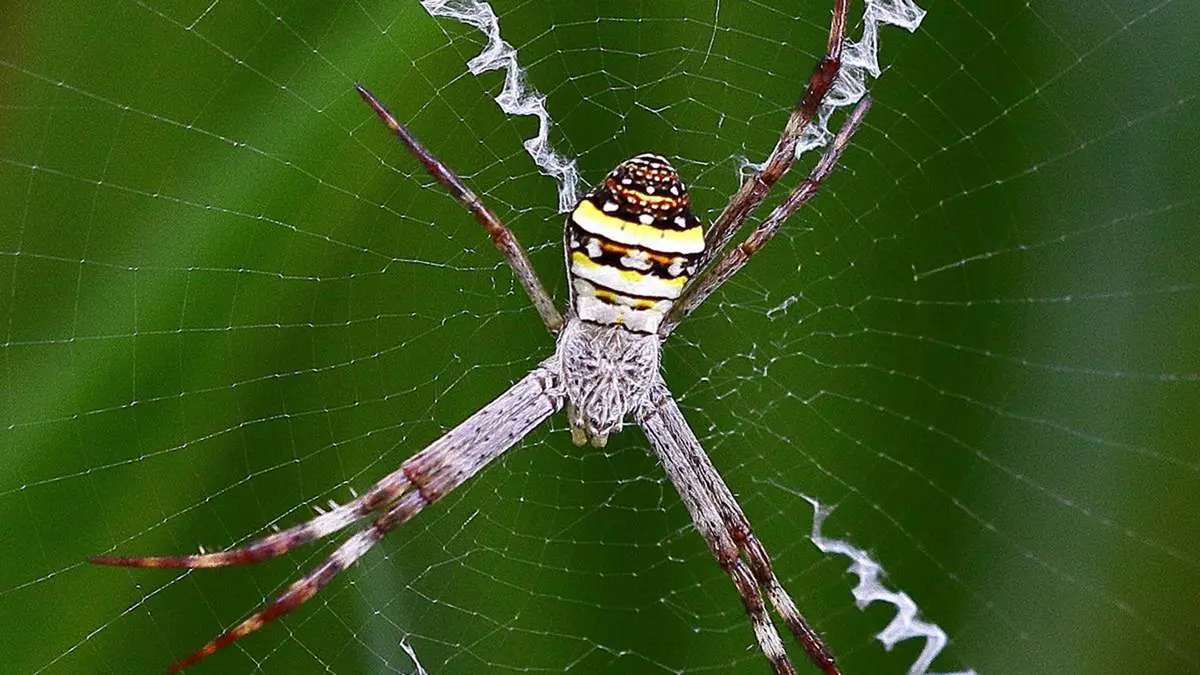
A study published in October 2025 examined how the distinctive silk decorations known as stabilimenta influence vibrations in the webs of orb‑weaver spiders. Using computer models based on the web of the European wasp spider (Argiope bruennichi), researchers found that these silk zigzags may help distribute lateral vibrations, potentially improving prey detection. The findings add nuance to a long‑running debate about the function of stabilimenta.
Background
Many orb‑weaving spiders construct additional silk structures in the centre of their webs. These decorations come in various shapes, including zigzags, crosses and circular discs, and are collectively called stabilimenta. First described by naturalists in the 19th century, stabilimenta have puzzled scientists for over a century. Hypotheses about their function range from camouflage against predators, prey attraction by reflecting ultraviolet light, strengthening the web, to temperature regulation or moisture collection. Some studies have shown that stabilimenta make webs more visible to birds, reducing web damage, while others suggest that they increase prey catch by attracting insects.
Insights from the new study
- Vibration spreading: Computer simulations indicate that stabilimenta only slightly slow down longitudinal vibrations (those moving straight along a thread) but can spread vibrations sideways when prey or debris strikes the web at an angle. This may allow spiders to localise prey more efficiently.
- Subtle effects: The differences in vibration patterns are modest and would be difficult to detect without advanced sensors. The study suggests that stabilimenta offer small benefits rather than large structural reinforcement.
- Multiple functions possible: Researchers caution that stabilimenta might serve several purposes simultaneously. They may enhance prey detection while also making webs visible to birds or acting as a refuge for the spider.
Broader significance
- Understanding spider ecology: Investigating stabilimenta helps scientists appreciate the complexity of spider behaviour and the evolutionary pressures that shape web design.
- Inspiration for materials science: Insights into how spiders control vibrations in silk networks could inform the design of lightweight structures and sensors that manage wave propagation.
- Conservation awareness: Many orb‑weaver species are declining due to habitat loss and pesticide use. Appreciating their ingenuity can foster support for biodiversity conservation.
Sources: Smithsonian Magazine