
Why in news?
Around the world, governments have adopted programmes to fortify foods with folic acid and encourage supplementation before and during pregnancy to prevent neural tube defects such as spina bifida. Health advocates in India note that the country still lacks a coordinated national programme for folic acid fortification and awareness, prompting renewed debate. Meanwhile, hospitals such as Mumbai’s Lilavati, in collaboration with the Spina Bifida Foundation and foreign universities, are planning intrauterine surgeries to repair birth defects like spina bifida.
Background
Spina bifida is a neural tube defect in which the spinal column and spinal cord fail to form or close properly during early embryonic development. This congenital condition occurs within the first month of pregnancy, often before a woman knows she is expecting. The exact cause is unknown, but a combination of genetic, nutritional and environmental factors is thought to play a role. Deficiency of folic acid (vitamin B9) before conception and in the early weeks of pregnancy is the most significant risk factor identified so far.
Types of spina bifida
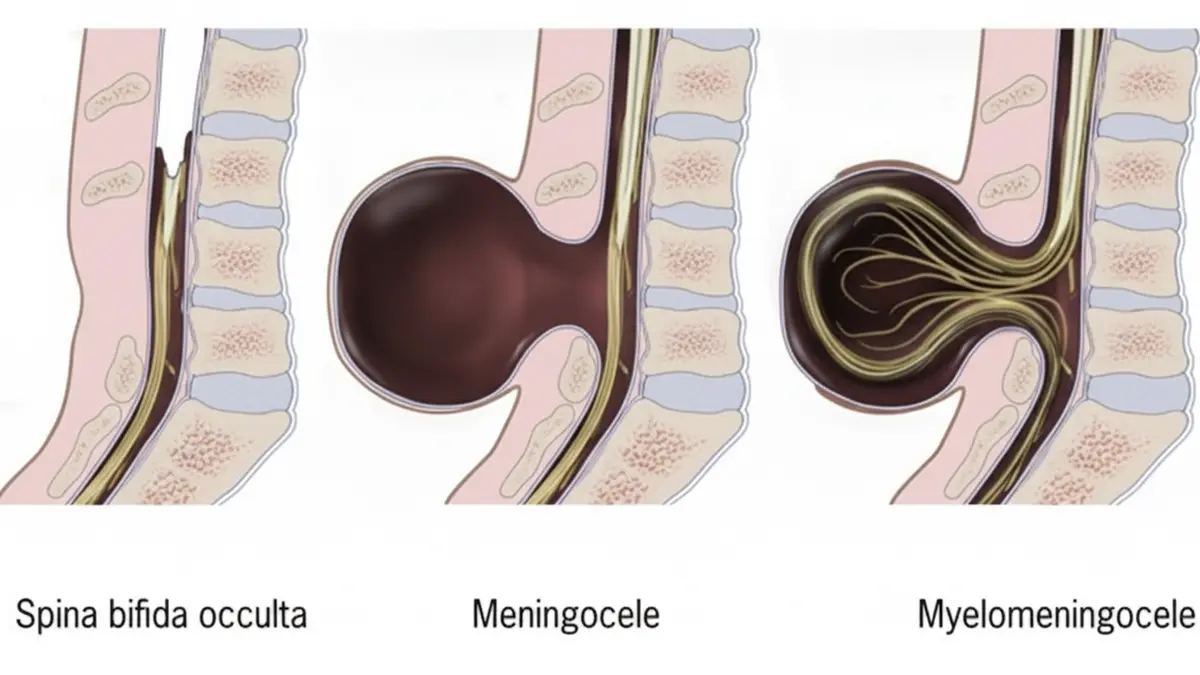
- Myelomeningocele: The most severe form. Part of the spinal cord and nerves protrude through an opening in the spine and are exposed in a sac on the baby’s back. This leads to varying degrees of paralysis and loss of sensation below the lesion and often requires urgent surgical closure after birth.
- Meningocele: A less common form. The protective membranes (meninges) bulge out through the spinal opening in a fluid sac but the spinal cord remains in place. Nerve damage may be milder than in myelomeningocele.
- Spina bifida occulta: The mildest form. One or more vertebrae fail to close properly, but the defect is covered by skin and often causes no symptoms. It is sometimes discovered incidentally.
Symptoms and complications
Children with severe spina bifida may experience bowel and bladder dysfunction, weakness or paralysis of the legs, orthopedic deformities and hydrocephalus (accumulation of cerebrospinal fluid in the brain). Learning difficulties and social challenges can occur. In milder forms there may be only a tuft of hair or dimple over the affected vertebrae.
Prevention and management
- Folic acid supplementation: Women planning to conceive should take a daily supplement of at least 400 micrograms of folic acid and continue through the first trimester. Many countries fortify staple foods such as flour with folic acid to reduce population‑wide risk.
- Healthy maternal lifestyle: Controlling diabetes, avoiding certain medications, maintaining a healthy weight and preventing overheating during early pregnancy may lower the risk.
- Surgical and supportive care: There is no cure for spina bifida, but early surgery can close the spinal defect. Physical therapy, occupational therapy, assistive devices and periodic medical follow‑up help individuals lead more independent lives. In severe cases, fetal surgery performed in utero may improve outcomes by limiting nerve damage before birth.
Sources: The Hindu