
Why in news?
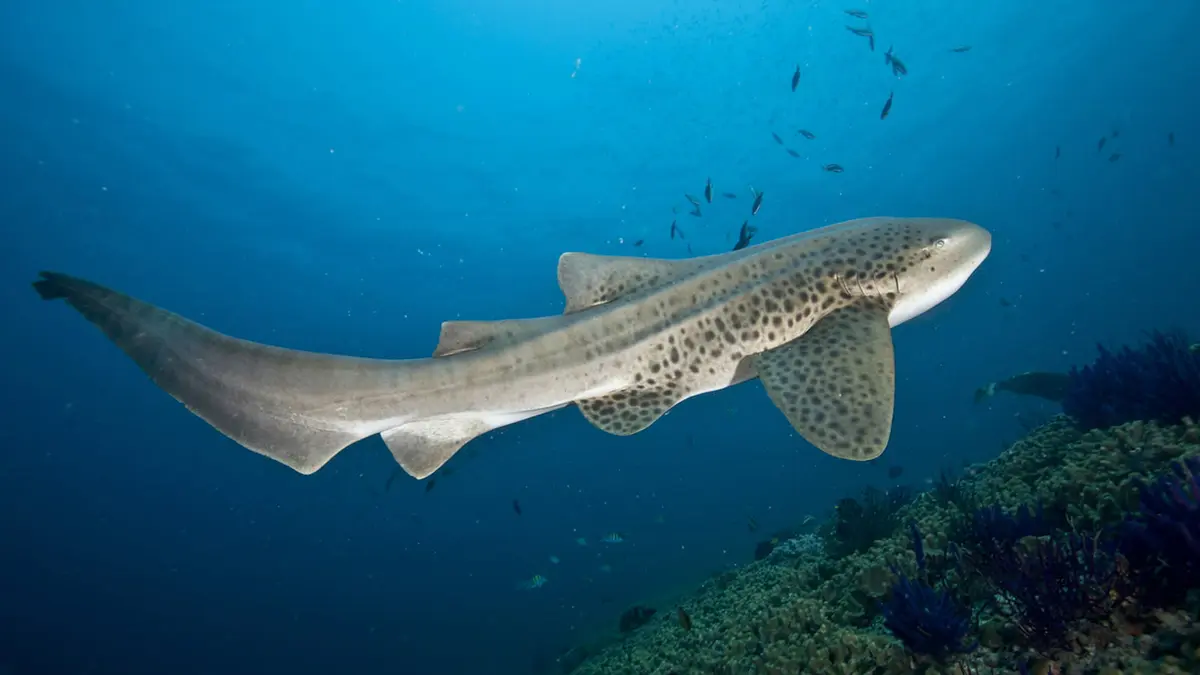
A pioneering rewilding project off Thailand’s Maiton Island recently released several aquarium‑bred Indo‑Pacific leopard sharks (also known as zebra sharks) into the wild. Conservationists hope to rebuild populations of this iconic species, which has been decimated by overfishing and habitat loss in the region.
Background
The Indo‑Pacific leopard shark (Stegostoma tigrinum) is a slow‑moving, bottom‑dwelling shark characterised by the transition from juvenile stripes to adult dark spots—hence its alternate names of zebra shark and leopard shark. It inhabits shallow coral reefs and sandy flats across the Indian and western Pacific oceans. Listed as Endangered by the IUCN, its numbers have plunged due to demand for fins and meat, entanglement in nets and degradation of coral habitats.
To combat this decline, Thai authorities and international partners collected egg cases from aquariums around the world and raised juveniles in sea pens near Phuket. The sharks were acclimatised to natural conditions, fitted with tracking devices and underwent health checks before release. The project is part of a broader initiative to restore reef predators and involves local fishers to foster community support.
Highlights of the initiative
- Captive breeding: Eggs from aquarium sharks were incubated and hatched in controlled environments to ensure genetic diversity. Juveniles spent months in sea pens learning to hunt natural prey before release.
- Monitoring and tags: Each shark was equipped with an acoustic transmitter and an identification tag. Researchers will track their movements, health and survival to gauge success.
- Community engagement: Fishers and tourism operators have been briefed on the importance of reef predators and have pledged to avoid catching tagged sharks. Outreach programmes also educate visitors about shark conservation.
- Habitat protection: Conservationists stress that reintroductions alone are insufficient; safeguarding coral reefs from destructive fishing, pollution and climate‑induced bleaching is essential for the sharks to thrive.
Importance
Leopard sharks play a vital role in reef ecosystems by controlling populations of shellfish and other invertebrates. Restoring their numbers could help balance reef food webs and promote coral health. The project also demonstrates how captive breeding and science‑based reintroductions can help recover marine species when combined with habitat protection and community support.
Sources : Reuters