
Why in news?
On 10 December 2025 customs officials at the Kempegowda International Airport in Bengaluru intercepted a passenger arriving from Bangkok and discovered two red‑shanked douc monkeys hidden in his luggage. The endangered primates were rescued and handed over to animal welfare authorities. The smuggling attempt has drawn attention to the growing illegal trade in exotic wildlife.
Background
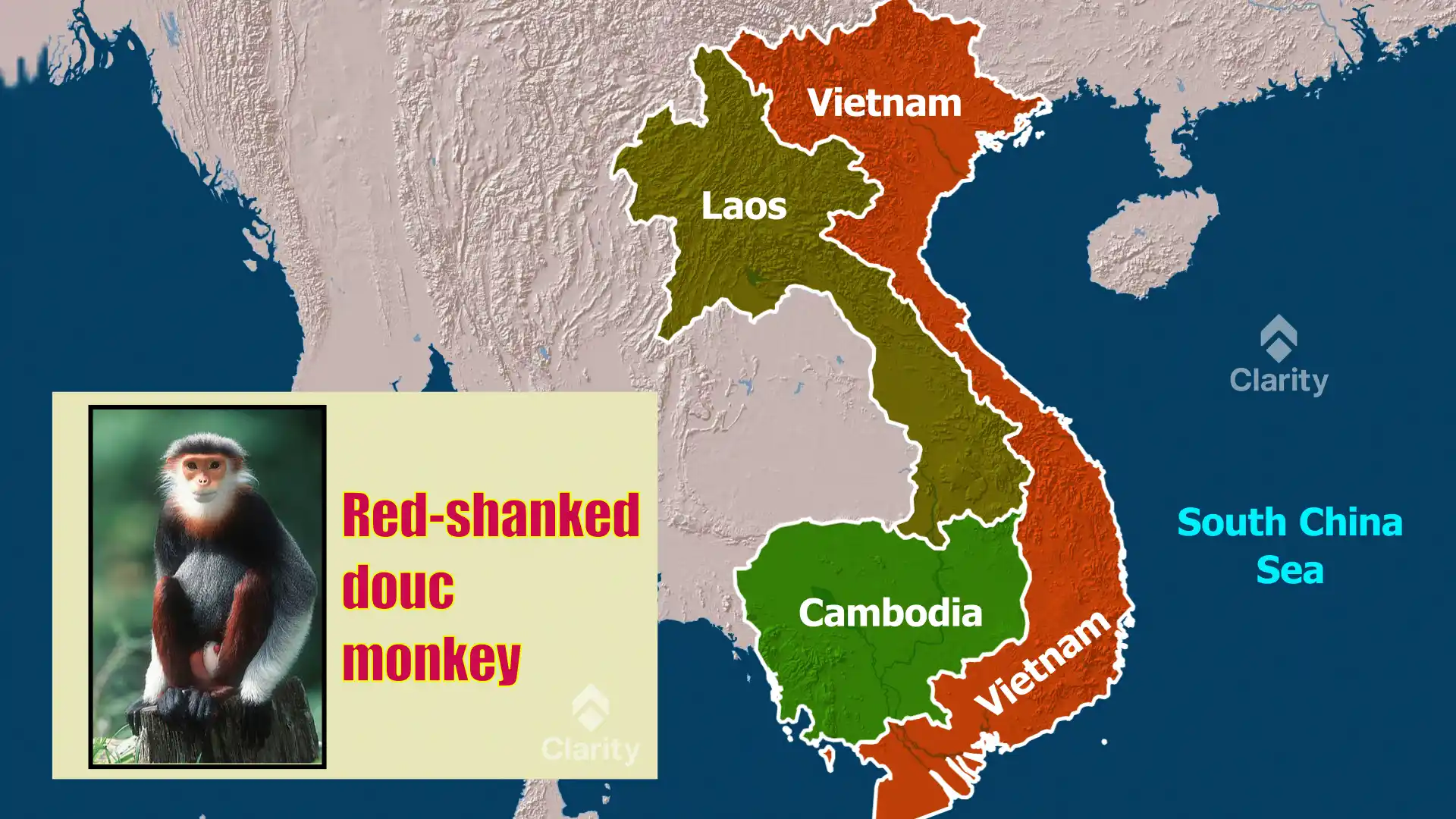
The red‑shanked douc (scientific name Pygathrix nemaeus) is a colourful leaf‑eating monkey native to the forests of Vietnam, Laos and Cambodia. Its striking appearance includes maroon legs, grey body fur, white whiskers and orange facial skin. The species spends most of its time in the tree‑tops and lives in groups, communicating through facial expressions and vocal calls. Females typically give birth to one infant after a gestation of about seven months. Because these monkeys feed mainly on leaves, buds and fruits, they require large tracts of evergreen and semi‑evergreen forest for survival. Over the last few decades their numbers have declined sharply because of habitat loss, hunting for bushmeat and traditional medicine and capture for the pet trade.
Details of the seizure
- Incident: Customs officers at Bengaluru airport noticed suspicious bags during routine screening. When opened, the bags contained two small cages with live red‑shanked douc monkeys.
- Action: The animals were immediately confiscated and placed under the care of the Forest Department. The passenger, a resident of Andhra Pradesh, was detained for questioning and the Directorate of Revenue Intelligence initiated an investigation.
- Conservation concern: Red‑shanked douc monkeys are classified as “endangered” by the International Union for Conservation of Nature (IUCN). Their wild population is estimated to have dropped by more than 50 percent over the past three decades. Removing individuals from the wild further threatens the survival of the species.
About red‑shanked douc monkeys
- Habitat: These monkeys inhabit lowland and mountainous forests in Indochina. They live in the canopy at elevations up to 1,600 metres and rarely descend to the ground.
- Social behaviour: Red‑shanked doucs live in groups of up to 50 individuals. They are diurnal and communicate using whistles, squeals and facial expressions.
- Diet: Their diet consists mainly of young leaves, fruits, flowers and seeds. They have specialised stomachs to digest tough foliage.
- Threats: Habitat destruction due to logging and agriculture, hunting for meat and body parts and capture for the exotic pet trade have led to severe population declines. Ongoing conflicts in their range have also hampered conservation efforts.
Significance and conservation
The seizure underscores the urgent need for stronger enforcement of wildlife protection laws and public awareness about the illegality of purchasing exotic animals. Red‑shanked doucs play an important ecological role as seed dispersers and indicators of forest health. Conservation measures include protecting remaining forest habitats, establishing wildlife corridors, and collaborating with local communities to reduce hunting. International cooperation is essential to curb the cross‑border wildlife trade.
Source: TH