
Why in news?
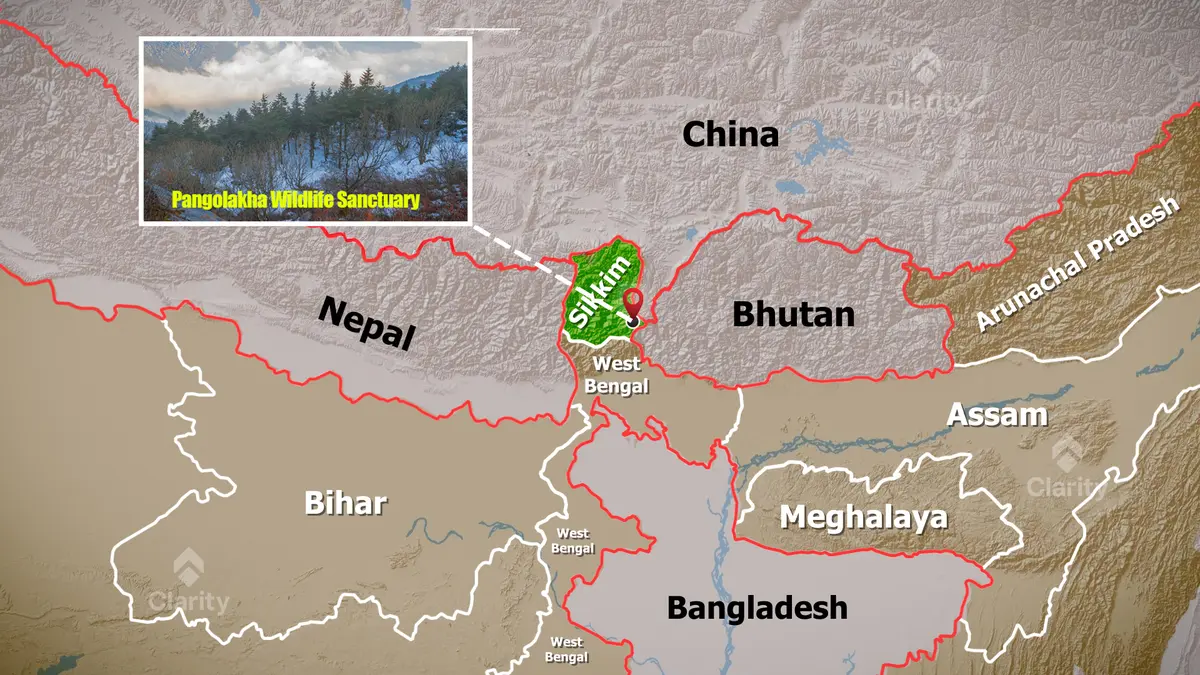
Camera‑trap images released by the Sikkim Forest Department confirmed that tigers have been using the Pangolakha Wildlife Sanctuary as a corridor to move between India and Bhutan. Photographs taken between 2018 and 2024 showed adult tigers traversing the high‑altitude sanctuary, and the findings were presented at an international wildlife monitoring workshop.
Background
Pangolakha Wildlife Sanctuary, notified in 2002, is located in Pakyong district in East Sikkim. It covers roughly 128 square kilometres and ranges from about 1,760 metres to 4,390 metres in elevation. Situated along the Chola range, it forms a tri‑junction between Sikkim, Bhutan and West Bengal and links with Bhutan’s forests and Neora Valley National Park in West Bengal. The sanctuary protects subalpine and temperate forests of rhododendron, oak, fir and juniper, interspersed with high‑altitude lakes such as Tsongmo and Menmecho.
Key features
- Rich biodiversity: Pangolakha is home to the endangered red panda, Himalayan black bear, leopard, takin, serow, goral, musk deer and many bird species such as the blood pheasant, Himalayan monal and white‑crested laughingthrush.
- Tiger corridor: Recent camera‑trap evidence confirms that tigers traverse the sanctuary en route to Bhutan. The movement across international borders highlights the importance of transboundary cooperation for big cat conservation.
- Community engagement: The state forest department has established Eco‑Development Committees in villages around the sanctuary. These bodies involve local residents in protecting wildlife, regulating grazing and promoting eco‑tourism.
Significance
- Conservation connectivity: The sanctuary serves as a vital link in the Eastern Himalayan corridor, enabling gene flow between animal populations and supporting climate‑resilient habitats.
- Ecotourism potential: Its lakes, forests and wildlife attract trekkers and birdwatchers, offering sustainable livelihood opportunities for nearby communities.
- Cross‑border collaboration: The tiger sightings underscore the need for India and Bhutan to coordinate monitoring, anti‑poaching measures and habitat management.
Conclusion
The discovery of tigers using Pangolakha Wildlife Sanctuary reaffirms the sanctuary’s global ecological value. Continuing research, community participation and cross‑border partnerships are essential to preserve this fragile Himalayan ecosystem.
Source: TH