
Why in news?
The Punjab government objected in January 2026 after the Bhakra Beas Management Board released silt‑laden water from Pandoh Dam into the Sutlej River instead of the Beas. The release damaged crops and infrastructure downstream and raised questions about dam management.
Background
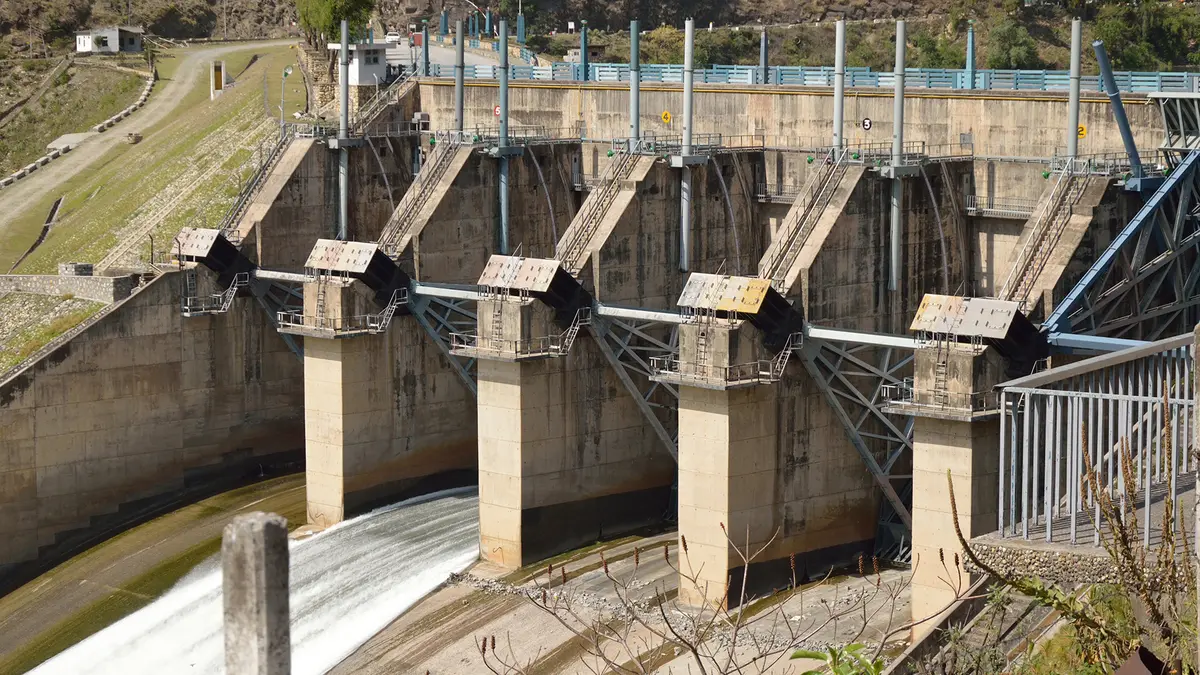
Pandoh Dam is an embankment dam on the Beas River in Mandi district, Himachal Pradesh. Completed in 1977, it diverts water through tunnels to the Dehar Power House on the Sutlej River as part of the Beas–Sutlej Link, which generates electricity. Environmental regulations require a portion of water to be released back into the Beas to maintain river flow and ecological health.
Key issues
- Silt accumulation: Sediments build up in the reservoir. Periodic flushing is necessary to prevent silt from reducing storage capacity, but sudden releases can cause damage downstream.
- Controversial release: Punjab officials reported that large volumes of sediment‑laden water were sent into the Sutlej, clogging canals, damaging crops and causing losses estimated at around ₹190 crore. They called for an independent audit and accountability.
- Environmental flows: Activists note that the dam often releases less than the mandated 15 percent of the Beas’s flow downstream, harming fish and river ecology.
- Interstate coordination: Mismanagement can lead to disputes between Himachal Pradesh and Punjab. Transparent operating protocols and joint monitoring are essential to prevent such incidents.
Significance
- The episode highlights the challenges of managing sediment and water flows in inter‑basin transfer projects.
- It underscores the need for proper reservoir management and adherence to ecological flow norms to protect downstream communities and ecosystems.
- Better coordination among states and agencies can minimise conflicts and ensure equitable sharing of resources.
Conclusion
While the Beas–Sutlej Link delivers hydropower benefits, releasing silt‑laden water without proper safeguards can cause significant harm. Authorities must adopt improved sediment management practices and involve all affected stakeholders in decision‑making.
Source: TRIB