
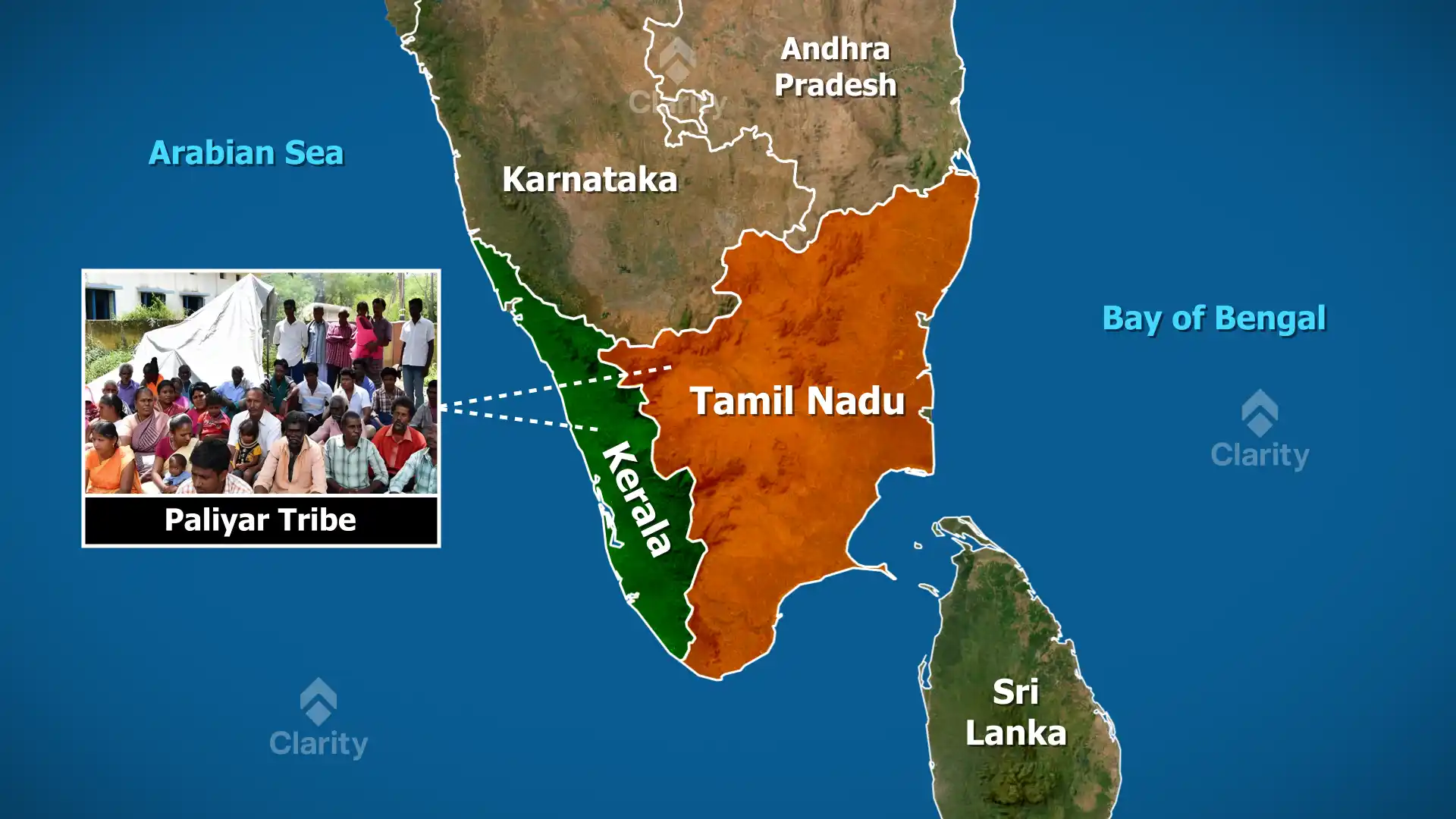
Why in news?
Conservationists and anthropologists have highlighted the need to preserve the culture and livelihoods of the Paliyar tribe in Tamil Nadu. This attention follows reports of deforestation and commercial agriculture encroaching on their traditional territories in the Palni Hills. Efforts are under way to document their customs and secure land rights under Scheduled Tribe protections.
Background
The Paliyar (or Paliyan) are a small Dravidian‑speaking tribe inhabiting the south‑western slopes of the Western Ghats in Tamil Nadu and Kerala. Traditionally they were nomadic hunter‑gatherers and honey hunters who lived in caves and rock shelters. Their way of life revolved around gathering tubers, fruits and honey, and they used forest knowledge to survive in an ecologically fragile landscape.
Cultural and social features
- Subsistence: Many Paliyars have transitioned from nomadism to settled agriculture, cultivating bananas, millet and minor millets. They also collect non‑timber forest produce like honey, resins and medicinal plants to sell in nearby markets. Beekeeping has become an important source of income.
- Rituals and sharing: The tribe practises a form of communal sharing. For example, when a member finds a patch of wild sweet potatoes, they silently dig some and leave the rest for others. Food is shared with those who return empty‑handed.
- Housing and clothing: Traditional dwellings were rock overhangs or simple huts thatched with leaves and branches. Today many live in small settlements built by the government but still maintain a close relationship with the forest.
- Language and classification: They speak the Paliyan language, closely related to Tamil. The Paliyar are classified as a Scheduled Tribe in Tamil Nadu, entitling them to constitutional safeguards and development programmes.
- Challenges: Encroachment by plantations, mining and tourism threatens their land and livelihood. Many Paliyars work as wage labourers on tea and cardamom estates, often facing exploitation. Loss of forest access erodes their traditional knowledge and identity.
Way forward
- Ensuring secure land rights under the Forest Rights Act and strengthening community forest management can help protect their habitat.
- Supporting sustainable livelihood options such as agro‑forestry, organic farming and value addition to forest produce can reduce dependence on wage labour.
- Cultural documentation and community‑led education programmes will help preserve the Paliyar language and traditions for future generations.
- Conservation policies should recognise indigenous peoples as custodians of biodiversity and integrate their knowledge into forest governance.
Source: TH