
Why in news?
A sightseeing helicopter carrying three people went missing during a 10‑minute tour over Mount Aso in Japan. Authorities later located wreckage inside the volcano’s crater at Naka‑dake. Strong winds and volcanic gases hampered rescue efforts, and the incident has raised concerns about safety measures for flights near active volcanoes.
Background
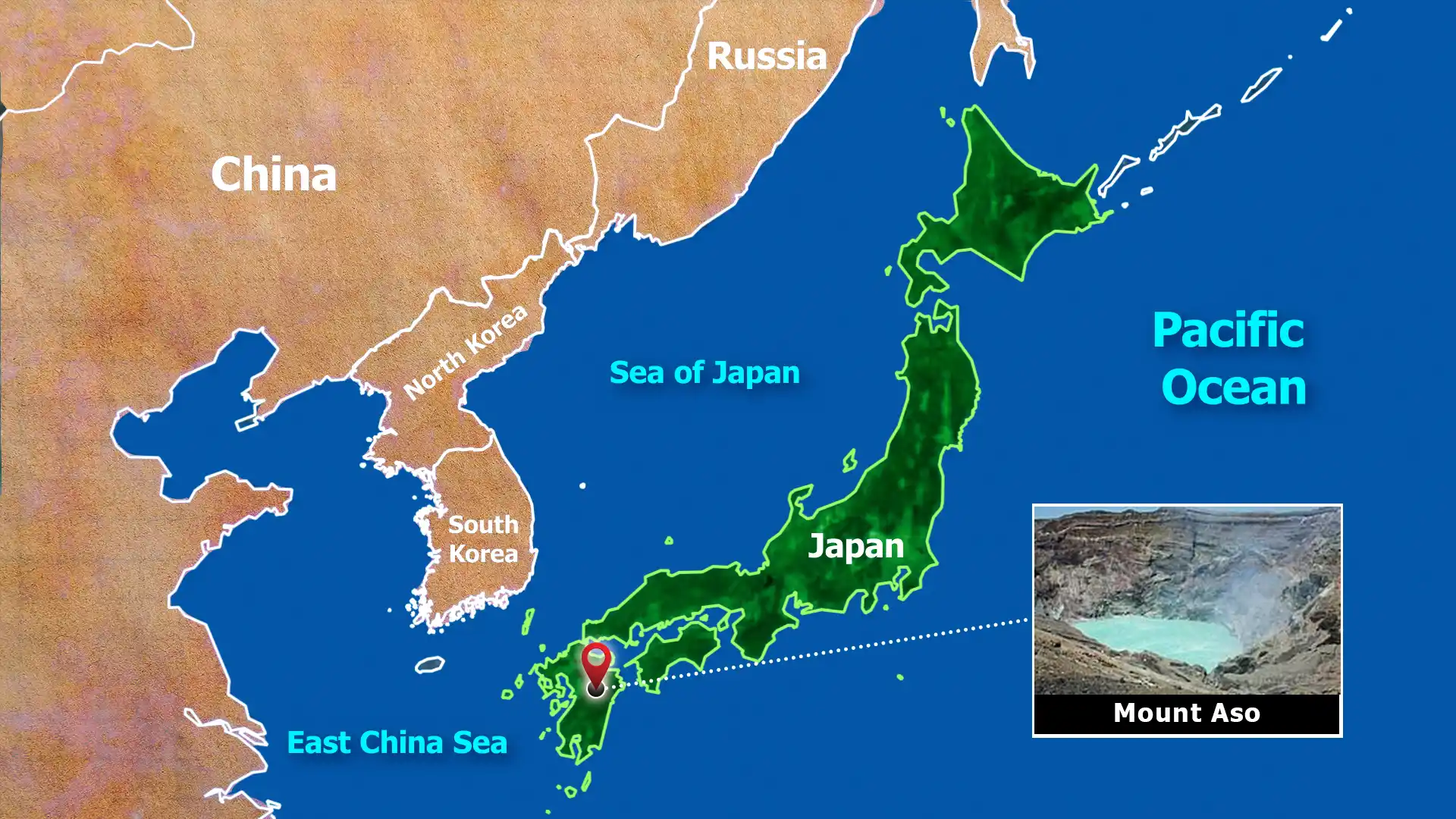
Mount Aso is an active volcano in Kumamoto Prefecture on Japan’s southern island of Kyushu. At about 1,592 metres high, it is part of the Aso‑Kuju National Park and features one of the world’s largest calderas. The caldera, formed by a series of explosive eruptions over hundreds of thousands of years, measures roughly 25 kilometres north to south and 18 kilometres east to west. Within it are several peaks, including the still‑active Naka‑dake, which frequently emits steam and gas. The area is a popular tourist destination for its hot springs, grasslands and panoramic crater views.
The accident
- Lost contact: The helicopter lost contact with air traffic control shortly after take‑off. A search mission involving police, fire departments and the Self‑Defence Forces located debris inside the crater.
- Challenging conditions: Strong winds and volcanic gases made it difficult for rescuers to reach the crash site quickly. Authorities temporarily closed nearby viewing areas and suspended other flights.
- Safety concerns: The incident has prompted calls to review regulations on sightseeing flights near active volcanoes, ensuring pilot training, weather monitoring and emergency protocols are robust.
About Mount Aso
- Geology: The Aso caldera formed after massive eruptions over the last 300,000 years. Within it, Naka‑dake is the most active crater, with eruptions recorded as recently as 2021.
- Landscape: The caldera floor contains grasslands and farmland, and hot springs attract visitors. The volcano’s crater holds a turquoise lake when rainfall is sufficient.
- Tourism: Visitors can usually approach designated safe zones around the crater via ropeways or walking trails. Helicopter tours offer aerial views, but flights depend on weather and volcanic activity alerts.
Conclusion
The Mount Aso accident is a reminder that tourism around active volcanoes carries inherent risks. Authorities will likely revisit safety guidelines for sightseeing flights, balancing the economic benefits of tourism with the need to protect lives.
Sources: MSN