
Why in news?
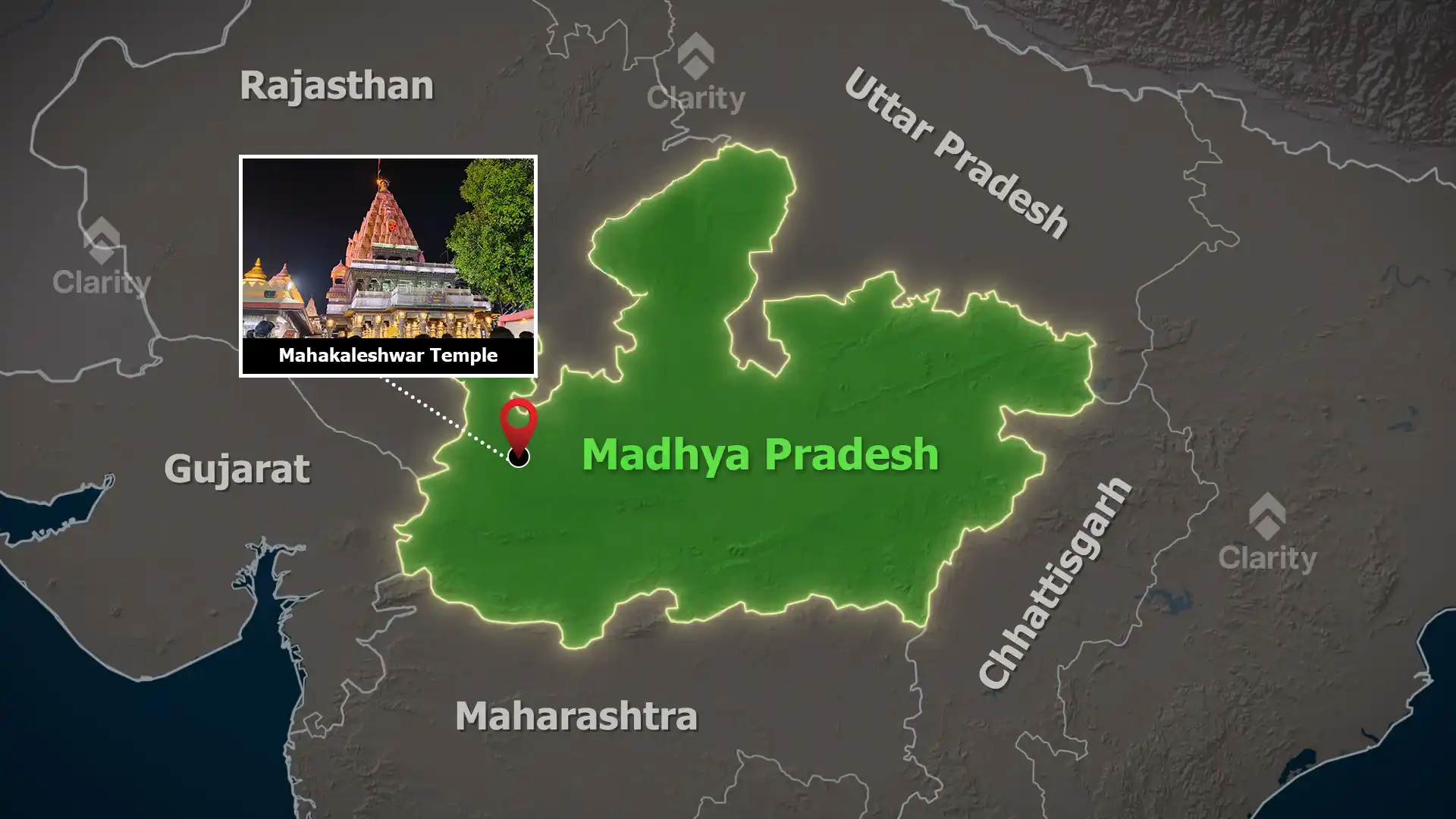
The Mahakaleshwar Temple in Ujjain has been in the spotlight due to record numbers of devotees attending the pre‑dawn Bhasma Aarti during the winter pilgrimage season. The temple is one of the twelve Jyotirlingas and a significant Shakti Peetha, making it a centre of spiritual and cultural life in Madhya Pradesh.
Background
Situated on the banks of the Shipra River, Mahakaleshwar is dedicated to Lord Shiva in his fierce form as Mahakala, the Lord of Time. Ancient legends say that Prajapati Brahma established the first shrine here. The temple was destroyed by invaders during the 13th century but was rebuilt in the 18th century by Maratha general Ranoji Shinde. The present structure is an impressive five‑storey complex combining Maratha, Chalukya and Bhumija architectural styles.
Historical highlights
- Destruction and revival: The temple was demolished by Iltutmish’s forces around 1234 CE and the Jyotirlinga was desecrated. It was later retrieved and re‑enshrined. Under Maratha patronage, the complex was rebuilt with high walls, ornate spires and elaborate carvings.
- Self‑manifested linga: Devotees believe the linga is Swayambhu, meaning it emerged on its own. This uniqueness is a major reason pilgrims flock here seeking liberation (moksha).
- Shakti Peetha: The temple is also considered one of the 18 major Shakti Peethas because devotees believe Goddess Sati’s upper lip fell here. This dual association with both Shiva and Shakti makes the site doubly sacred.
Architectural features and rituals
- Maratha‑Chalukya blend: The five‑storey structure features massive stone walls, carved pillars and balconies. The Garbhagriha (sanctum) houses the Jyotirlinga, above which sits the idol of Omkareshwar Shiva. Images of Parvati, Ganesha and Kartikeya adorn the inner walls.
- Bhasma Aarti: Every morning before sunrise, priests smear sacred ash on the linga while chanting Vedic hymns. Mahakaleshwar is the only Jyotirlinga where this unique ritual is performed daily, drawing thousands of devotees.
- Nagchandreswar idol: On the third floor rests the serpent‑adorned form of Shiva, open for darshan only on the festival of Nag Panchami.
Significance
- Spiritual centre: The temple symbolises the conquest of time and death, inspiring devotees to seek liberation from the cycle of birth and death.
- Cultural heritage: Its architecture reflects a blend of different styles across centuries, showcasing the artistic and religious synthesis of ancient and medieval India.
- Pilgrimage hub: Millions visit each year, supporting local livelihoods and contributing to Ujjain’s economy while sustaining age‑old traditions.
Source: TH