
Why in news?
A 29‑year‑old man from Karnataka succumbed to Kyasanur Forest Disease (KFD) in January 2026, drawing attention to this tick‑borne viral infection. Health officials emphasised the need for awareness, early detection and vaccination, particularly in forested districts of southern India where the disease is endemic.
Background
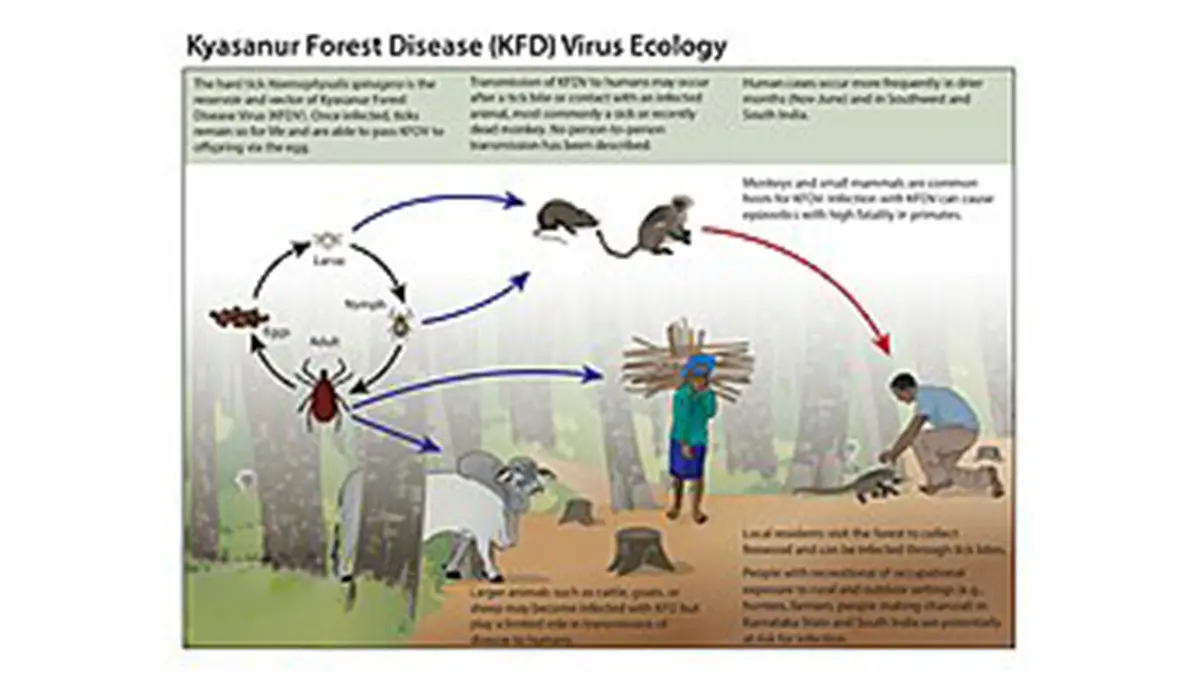
KFD is a viral haemorrhagic fever caused by a flavivirus transmitted by forest ticks (Haemaphysalis spinigera). The disease was first identified in 1957 in the Kyasanur Forest of Karnataka, giving rise to its name. It affects monkeys, rodents and humans; outbreaks typically occur between October and May. Although a vaccine exists, low awareness and poor vaccine coverage have allowed sporadic outbreaks.
Transmission
- Vector: Hard ticks carry the virus and infect animals such as monkeys, rodents and livestock. Humans are infected through tick bites or by handling sick or dead animals.
- No human‑to‑human transmission: Unlike some viral haemorrhagic fevers, KFD does not spread between people.
- Seasonality: Cases begin to rise in October and peak between January and April when tick populations are high.
Symptoms
- Early symptoms include sudden high fever, chills, headache, body aches, nausea and vomiting.
- Severe cases may progress to haemorrhagic manifestations such as bleeding from the nose, gums or gastrointestinal tract, and neurological complications like tremors, confusion and poor reflexes.
- The case fatality rate ranges from 2–10%; prompt medical care greatly improves survival.
Treatment and prevention
- There is no specific antiviral treatment; management is supportive, involving hydration, oxygen, blood pressure stabilisation and management of bleeding.
- A locally produced inactivated vaccine is administered to people living or working in high‑risk areas; multiple doses and boosters are required.
- Preventive measures include avoiding forest areas during peak season, wearing full‑sleeved clothing, using tick repellents, and refraining from handling dead animals.
Source: The Times of India