
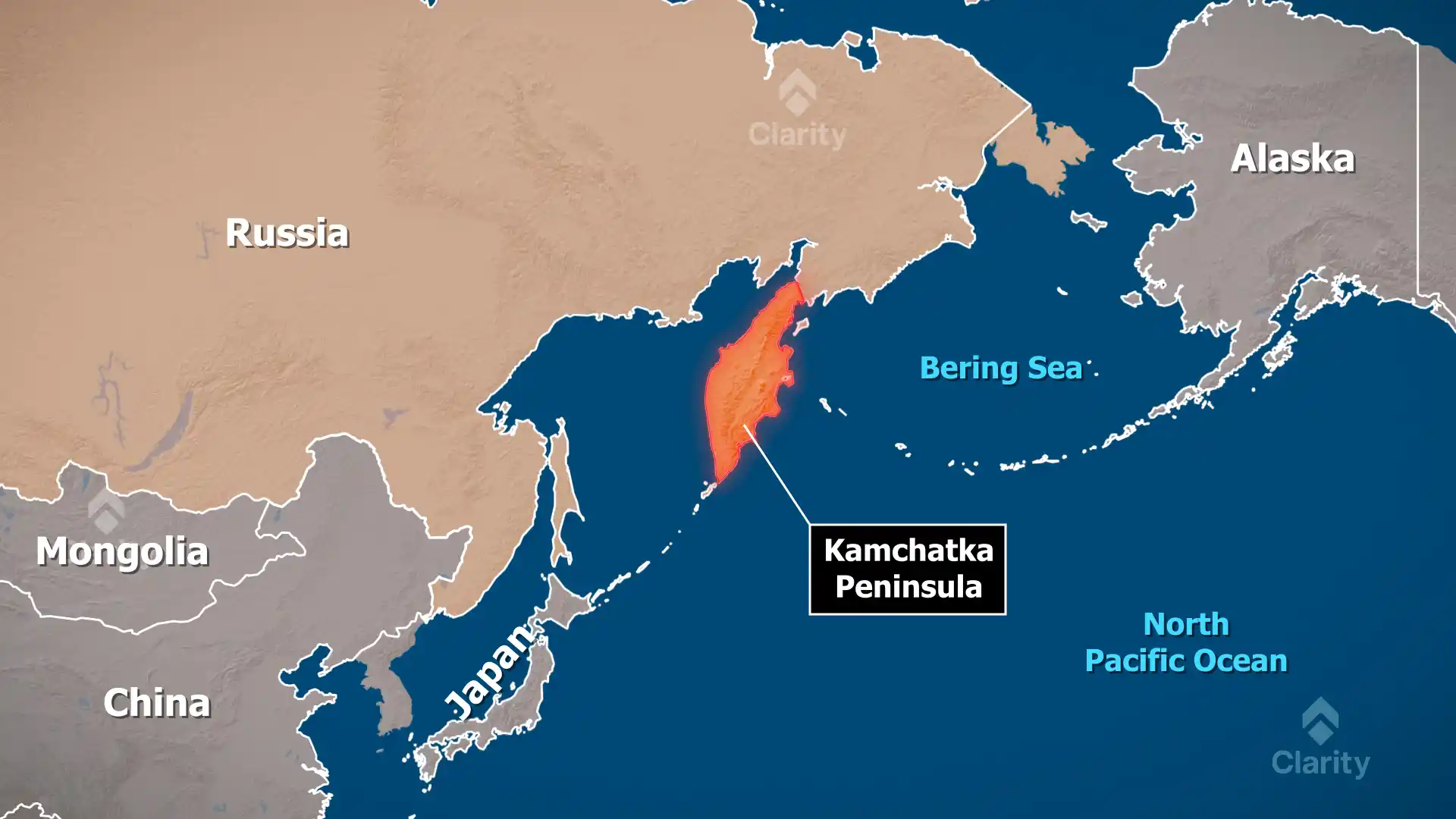
Why in news?
The Russian Far East’s Kamchatka Peninsula experienced its heaviest snowfall in decades. More than two metres of snow fell in the first half of January 2026, following over 3.7 metres in December 2025, burying cars and blocking roads. Scientists attribute the extreme weather to a weakened polar vortex and a wavy jet stream that allowed Arctic air to pour south.
Background
Kamchatka is a 1,250‑kilometre‑long peninsula in Russia that juts into the Pacific Ocean between the Sea of Okhotsk and the Bering Sea. Covering around 270,000 square kilometres, it is part of the Pacific Ring of Fire and hosts more than 300 volcanoes, about 29 of which are currently active. The peninsula’s rugged landscape features snow‑capped mountains, geysers, hot springs and rich wildlife including brown bears and salmon. Much of Kamchatka is designated as a UNESCO World Heritage Site because of its volcanic activity and ecological value.
The snowfall event
- Historic depths: In some towns, snowdrifts reached the height of first‑floor windows, trapping residents indoors. Petropavlovsk‑Kamchatsky, the regional capital, virtually shut down as streets and parking lots disappeared under snow.
- Meteorological cause: Scientists explained that a weakened polar vortex allowed Arctic cold to move southwards while a meandering jet stream brought moist air from the Pacific, resulting in prolonged snowstorms.
- Disruptions: Schools and businesses closed, flights were cancelled and ships were stuck in port. Authorities advised residents to clear roofs to prevent collapses and used heavy machinery to dig out roads.
About Kamchatka
- Volcanic belt: The peninsula has the highest density of volcanoes in the world, including towering peaks like Klyuchevskaya Sopka (4,754 metres). Frequent eruptions create fertile soils and spectacular landscapes.
- Climate: Winters are long and stormy, with heavy snow due to moist air from the Pacific and the Sea of Okhotsk. Summers are cool and short.
- Biodiversity: Rivers teeming with salmon support large populations of brown bears and eagles. The rugged coastline shelters sea otters, seals and colonies of seabirds.
Conclusion
The extreme snowfall on Kamchatka underscores the unpredictable nature of weather patterns influenced by climate change. Understanding the interplay between polar vortices and jet streams will be essential for forecasting and adapting to such events in the future.
Sources: TOI