
Why in news?
On 24 January 2026 heavy rains triggered a landslide in the Pasir Langu village of West Bandung district, West Java, Indonesia. The disaster buried homes and killed at least eight people, with dozens more missing. Rescue efforts were hampered by unstable terrain and continued rainfall. The incident drew attention to the island’s geography and vulnerability to natural hazards.
Background
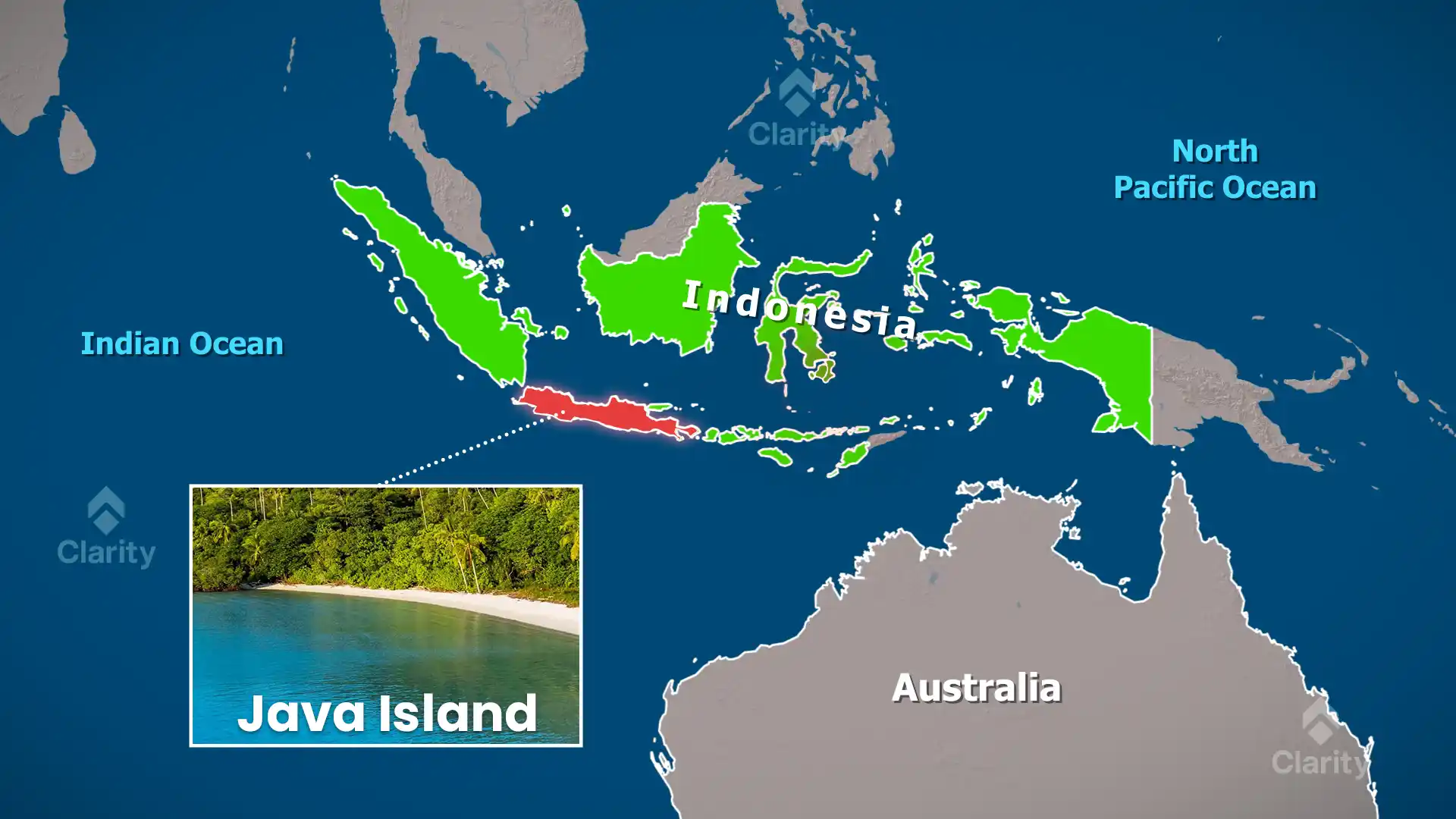
Java is Indonesia’s political and economic heartland. Measuring about 126,700 square kilometres, it is the world’s most populous island and the fifth largest in Indonesia. Java is one of the Greater Sunda Islands, which also include Sumatra, Borneo and Sulawesi. It lies between the Java Sea to the north and the Indian Ocean to the south. The island owes its origin to tectonic activity: the Australian Plate subducts beneath the Sunda Plate, giving rise to a chain of volcanoes and frequent earthquakes.
Key features of Java
- Population centre: About 156 million people — roughly 56 percent of Indonesia’s population — live on Java. Jakarta, the national capital, and the ancient city of Yogyakarta are located here.
- Volcanic landscape: The island is home to more than 40 active volcanoes, including Mount Merapi and Mount Bromo. Volcanic ash has created fertile soils that support intensive rice and tea cultivation.
- Cultural history: Java was the centre of powerful Hindu‑Buddhist kingdoms such as Majapahit and later Islamic sultanates. It became the core of the colonial Dutch East Indies and played a central role in Indonesia’s independence movement.
- Natural hazards: The combination of steep slopes, deforestation and heavy monsoon rains makes landslides frequent. Earthquakes and volcanic eruptions are also common hazards.
The West Java landslide
- Event details: Torrential rainfall on 24 January 2026 triggered a predawn landslide in Pasir Langu village, burying dozens of houses. Initial reports from Indonesia’s disaster mitigation agency stated that at least eight people were killed and over 80 were missing.
- Rescue challenges: Rain and unstable soil forced rescuers to pause operations overnight. Volunteers, police and the military used shovels, drones and sniffer dogs to search for survivors.
- Underlying causes: Environmental experts point to excessive clearing of forests and agriculture on steep slopes as factors that exacerbate landslides. Climate change is also increasing the intensity of monsoon rainfall in the region.
Significance
- Risk awareness: The tragedy highlights the need for better land‑use planning, reforestation and early warning systems in landslide‑prone areas.
- Island geography: Understanding Java’s volcanic origin and population density helps explain why disasters there can have far‑reaching impacts.
- Sustainable development: Balancing economic growth with environmental protection is essential to mitigate the risks posed by natural hazards on densely populated islands like Java.
Source: WION