
Why in news?
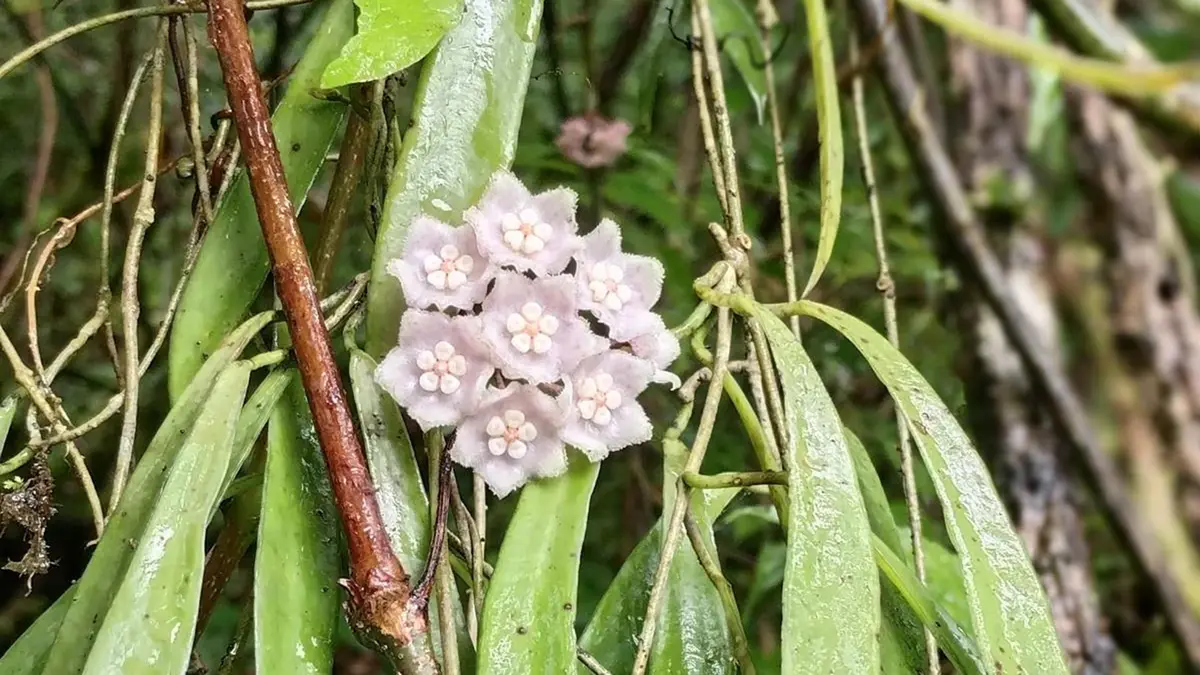
Researchers from Nagaland University and partner institutions have described a new species of wax plant, Hoya nagaensis, discovered in the high‑altitude community forest near Khezhakeno village in Phek district. The discovery, published in the Kew Bulletin, underscores the biodiversity of northeast India and the importance of community‑protected forests.
Background
The genus Hoya comprises more than 300 species of epiphytic climbers known for their waxy, star‑shaped flowers. During botanical surveys conducted between 2023 and 2025, researchers encountered an unknown Hoya in the Kavunhou community forest. Detailed comparison with known species and genetic analysis confirmed it as a new species. The epithet “nagaensis” honours Nagaland, reflecting both the cultural heritage of the Naga people and the ecological significance of their forests.
Distinctive traits
- Densely hairy flowers: The corolla lobes are covered with hairs on both the inner and outer surfaces. This feature distinguishes H. nagaensis from close relatives like H. thomsonii and H. coronaria.
- Colour pattern: The petals display irregular pinkish to reddish‑purple spots on a pale background, with similar but less pronounced markings on the inside.
- Narrow leaves: Leaves are narrowly elliptic to lanceolate, smooth on both sides and end in long pointed tips.
- Habitat: The plant grows as an epiphyte on trees in cool, moist montane forests at around 1,600 metres elevation. Community protection of the forest has preserved this habitat.
Why it matters
- Biodiversity hotspot: The discovery highlights Nagaland’s rich but under‑documented plant diversity and supports calls for continued botanical exploration.
- Conservation message: Community‑protected forests like Kavunhou offer refuge for rare species. Recognizing and supporting local conservation efforts helps safeguard these ecosystems.
- Taxonomic clarity: The formal description of Hoya nagaensis contributes to understanding the evolution and classification of the genus Hoya in Asia.
Source: TH