
Why in news?
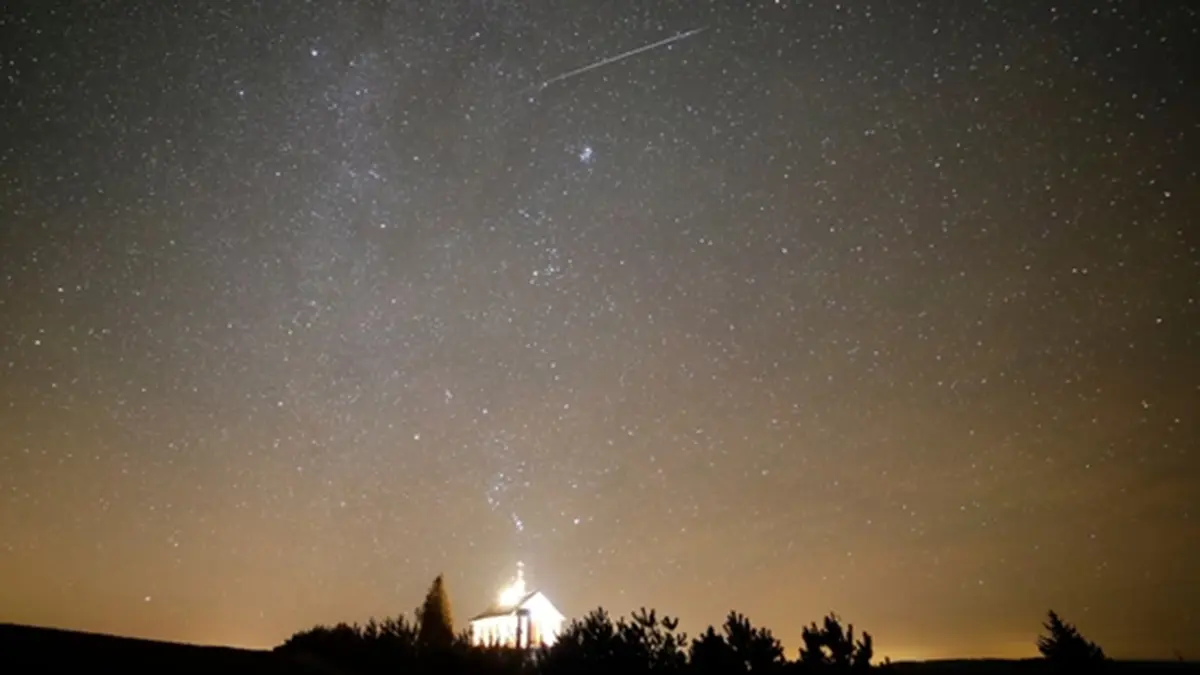
Stargazers around the world, including those in India, look forward to the Geminid meteor shower, which peaks during the night of 13–14 December. This year’s display is expected to be particularly impressive because a waning crescent moon will not overpower the streaks of light.
Background
Meteor showers occur when Earth passes through streams of dust and debris left behind by comets or asteroids. When these tiny particles enter our atmosphere, friction makes them glow briefly as meteors. The Geminids are unusual because they originate from an asteroid called 3200 Phaethon rather than a traditional comet. They were first observed in 1862 and have grown stronger over time as Earth encounters denser parts of the debris trail.
What to expect in 2025
- Peak timing: The shower is active from late November to around 24 December, but the peak is predicted for the early hours of 14 December. In India, the best viewing will be after 10 p.m. on 13 December until dawn on the 14th.
- Radiant point: Meteors appear to emanate from the constellation Gemini near the bright star Castor. In 2025, the planet Jupiter will be close to the radiant, providing a helpful reference point.
- Number of meteors: Under dark, clear skies observers may see up to 120 meteors per hour. Even in city skies, patient viewers can catch dozens of bright streaks.
- Viewing tips: Find a spot away from bright lights with an unobstructed view of the sky. Let your eyes adjust to the dark for at least 20 minutes. Lie back and scan the entire sky rather than staring at one point, since meteors can appear anywhere.
Origin of the Geminids
- Parent body: 3200 Phaethon is sometimes called a “rock comet” because it behaves like both an asteroid and a comet. It approaches the Sun closer than any other named asteroid, heating its surface and causing dust to crack off.
- Debris trail: As Phaethon orbits the Sun once every 1.43 years, it leaves behind a stream of rocky particles. Earth crosses this stream every December, producing the Geminid shower.
- Reliability: The Geminids are one of the most consistent and spectacular meteor showers, rivalled only by the Perseids in August. Their meteors are often bright and can produce colourful fireballs.
Significance
- Educational value: Meteor showers offer a free outdoor science lesson. Observing them can inspire interest in astronomy and help people learn about the solar system’s dynamics.
- Cultural importance: Many cultures associate meteor showers with good luck or important events. Watching the Geminids can be a shared experience for families and communities.
Conclusion
This December, the Geminid meteor shower will provide a sparkling finale to the year. By planning ahead and seeking dark skies, sky watchers can enjoy one of nature’s most reliable celestial shows.
Source: HT