
Why in news?
On 23 January 2026 the Indian Air Force’s Surya Kiran aerobatic team performed a thrilling air show over the Gangapur Dam near Nashik. Thousands of spectators lined the dam’s banks to witness the display, which was delayed by fog but eventually drew huge crowds. The event highlighted the dam as both an engineering landmark and a community recreation space.
Background
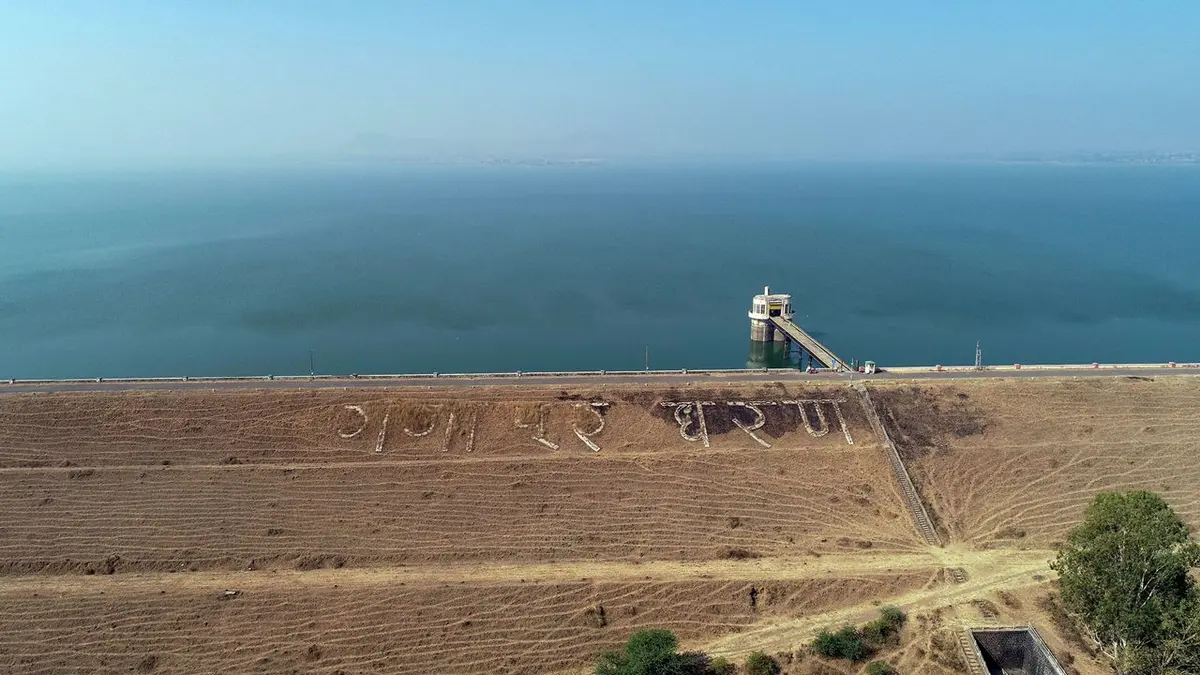
Gangapur Dam is an earth‑fill embankment across the Godavari River in Nashik district, Maharashtra. Construction began soon after India’s independence, with the foundation stone laid in 1947, and the dam became fully operational in 1965. It extends about 3.8 kilometres and stands roughly 36 metres high, making it one of the longest earthen dams in Asia. Built primarily from clay, sand and rock, it was designed to supply drinking water to Nashik city and irrigate farmland along both riverbanks.
Key facts about Gangapur Dam
- Design and structure: The dam’s gentle slope and wide base allow it to hold back a vast reservoir using natural materials. It has radial spillway gates and two canals on the left and right banks to distribute water for irrigation.
- Water supply and agriculture: Gangapur reservoir is the main source of drinking water for Nashik and supplies irrigation water to thousands of hectares of vineyards, vegetable farms and orchards downstream.
- Biodiversity and tourism: Wetlands around the dam host migratory birds and support a mosaic of vineyards, temples, gardens and adventure parks. The earthen dam and adjoining reservoir are popular picnic spots for residents and visitors.
- Community events: Public gatherings such as the Surya Kiran air show demonstrate how infrastructure can double as a venue for cultural and patriotic events, bringing people together in open spaces.
Significance
- Water security: By storing monsoon flows of the Godavari, the dam ensures year‑round drinking water and irrigation for the region.
- Economic benefits: Reliable water supply has allowed the growth of Nashik’s horticulture industry, especially its famous vineyards, while tourism around the dam supports local livelihoods.
- Environmental value: The reservoir’s wetlands provide habitat for birds and other wildlife, illustrating how engineered structures can coexist with nature.
Conclusion
The Surya Kiran show drew attention to the importance of Gangapur Dam not only as critical water infrastructure but also as a community space. Ongoing maintenance and environmental care are vital to sustain its benefits for people and nature.
Source: TH