
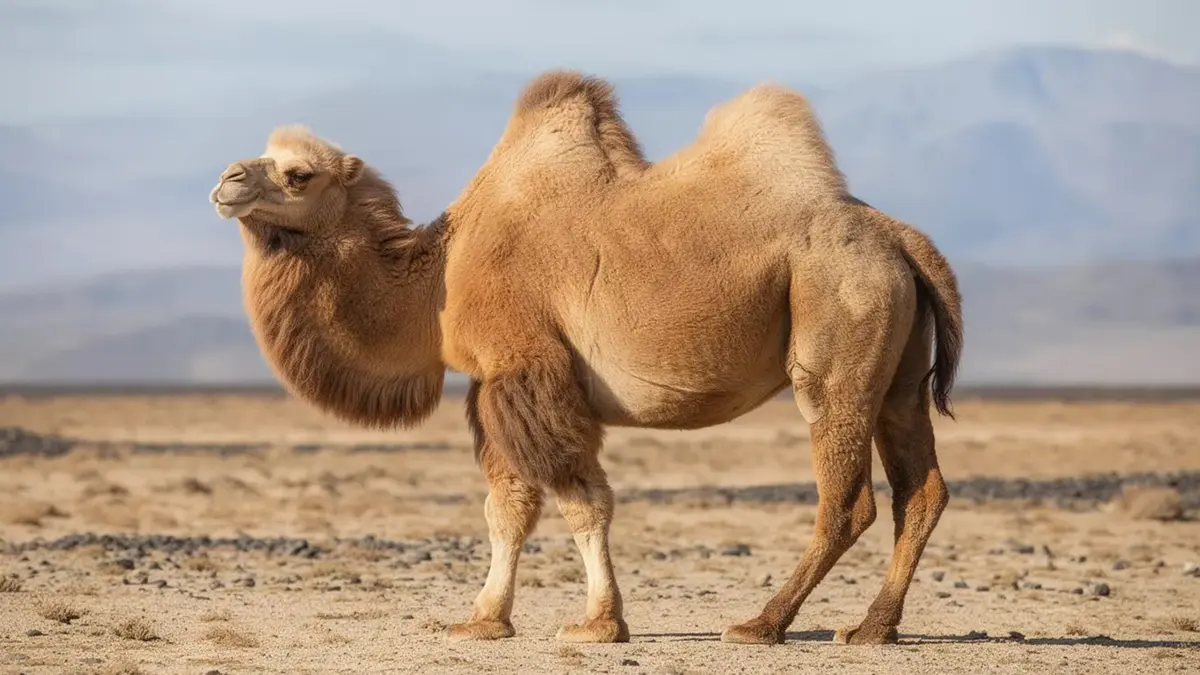
Why in news?
India’s Ministry of Defence announced that the animal contingent at the 77th Republic Day parade in 2026 will include two double‑humped Bactrian camels from Ladakh. These rare camels, inducted into the Indian Army in 2024, will join Zanskari ponies, trained birds of prey and indigenous dog breeds on Kartavya Path, highlighting the role of animals in high‑altitude operations.
Background
The double‑humped Bactrian camel (Camelus bactrianus) is native to the steppes and deserts of Central Asia and is well adapted to the harsh environment of Ladakh’s cold deserts. Small populations survive in India’s Nubra Valley, where the camels are used for transport and tourism. Compared with the single‑humped dromedary, Bactrians have two fat‑filled humps that provide energy and water when food is scarce. The species is classified as critically endangered on the IUCN Red List due to habitat loss and small population size.
Adaptations
- Fat‑storing humps: The two humps act as reservoirs of fat, which the camel metabolises into water and energy during long treks in arid regions. Contrary to popular belief, the humps do not store water directly.
- Thick seasonal coat: Bactrian camels grow a dense, shaggy coat in winter to withstand temperatures below –40 °C. The coat sheds in summer, helping them survive in temperatures exceeding 40 °C.
- Sealable nostrils and long eyelashes: Their nostrils close to keep out blowing snow or sand, and their bushy eyebrows and double rows of eyelashes protect their eyes.
- Wide, cushioned feet: The camels’ broad footpads spread weight evenly like natural snowshoes, allowing them to walk on soft sand or snow without sinking.
- Survival skills: Bactrian camels can drink up to 30 gallons of water in a short time and can go for weeks without drinking. They are among the few land mammals that can eat snow to meet their water needs in winter.
Significance and uses
At high altitudes where vehicles struggle, double‑humped camels can transport 250 kilograms of supplies, making them invaluable to the Indian Army along the disputed Himalayan borders. Including them in the Republic Day parade draws attention to the conservation of this rare species and showcases India’s capacity to operate in extreme terrain.
Sources: India Today