
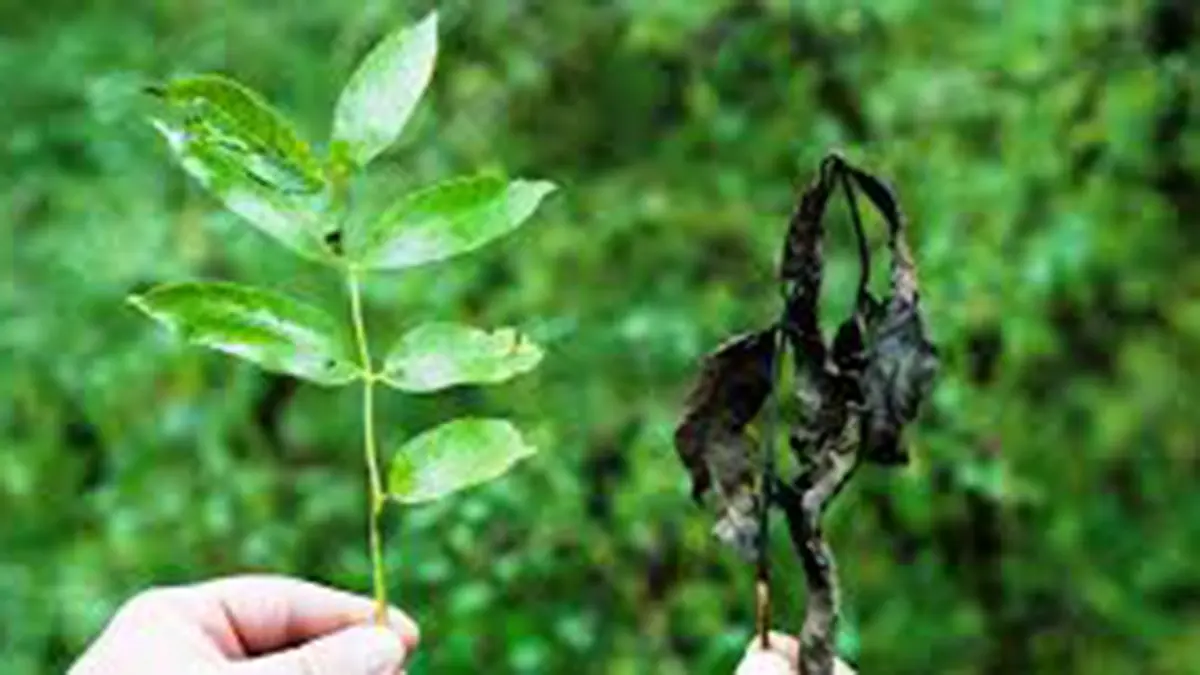
Why in news?
Authorities in Telangana have reported widespread dieback of neem trees across Hyderabad and surrounding districts. Residents are worried about the decline of a tree that provides shade, medicinal products and ecological benefits. The Forest College and Research Institute (FCRI) has launched a detailed study to determine the cause and develop management strategies.
What is neem dieback?
Dieback refers to the progressive death of shoots, twigs and branches starting at the tips and moving towards the trunk. In neem trees (Azadirachta indica), the disease manifests as drying of upper branches soon after the monsoon, thinning foliage, reduced flowering and fruiting, and canopy loss. A fungal pathogen identified as Phomopsis azadirachtae has been found to infect the trees, becoming active between October and February.
Key findings from Telangana
- Spread: The disease, first noted on the FCRI campus in 2021, has now spread extensively across Telangana, Andhra Pradesh, Tamil Nadu and other southern states.
- Symptoms and impact: Affected trees show drying of the top branches, reduced canopy and poor seed production. Because neem seeds are dispersed by birds, fewer seeds mean fewer young trees replacing older ones.
- Control measures: FCRI previously recommended a three‑step fungicide protocol using carbendazim, thiophanate‑methyl and profenofos at weekly intervals. However, results in urban areas have been inconsistent, and many trees recover naturally with the onset of summer.
- Research underway: Current studies aim to understand why Phomopsis azadirachtae becomes highly active after the monsoon and to identify genetic traits that make some trees resilient. Researchers will compare urban and rural samples to determine whether stress factors like pollution or water scarcity influence infection levels.
Why neem matters
Neem is revered in India for its medicinal properties and ecological role. Its leaves, bark and seeds are used in traditional remedies, while its canopy provides shade and habitat for birds and insects. The dieback phenomenon threatens these benefits and raises concerns about urban tree health. FCRI emphasises that neem dieback does not pose a risk to human health—only the trees are affected.
The way forward
Researchers plan to develop disease‑resistant neem varieties through tissue culture and micropropagation. They also call for coordinated efforts among municipal agencies, forestry departments and citizens to monitor tree health, implement sanitation measures and conserve surviving healthy specimens. Public awareness campaigns can encourage reporting of affected trees and discourage indiscriminate use of fungicides.
Source: DC