
Why in news?
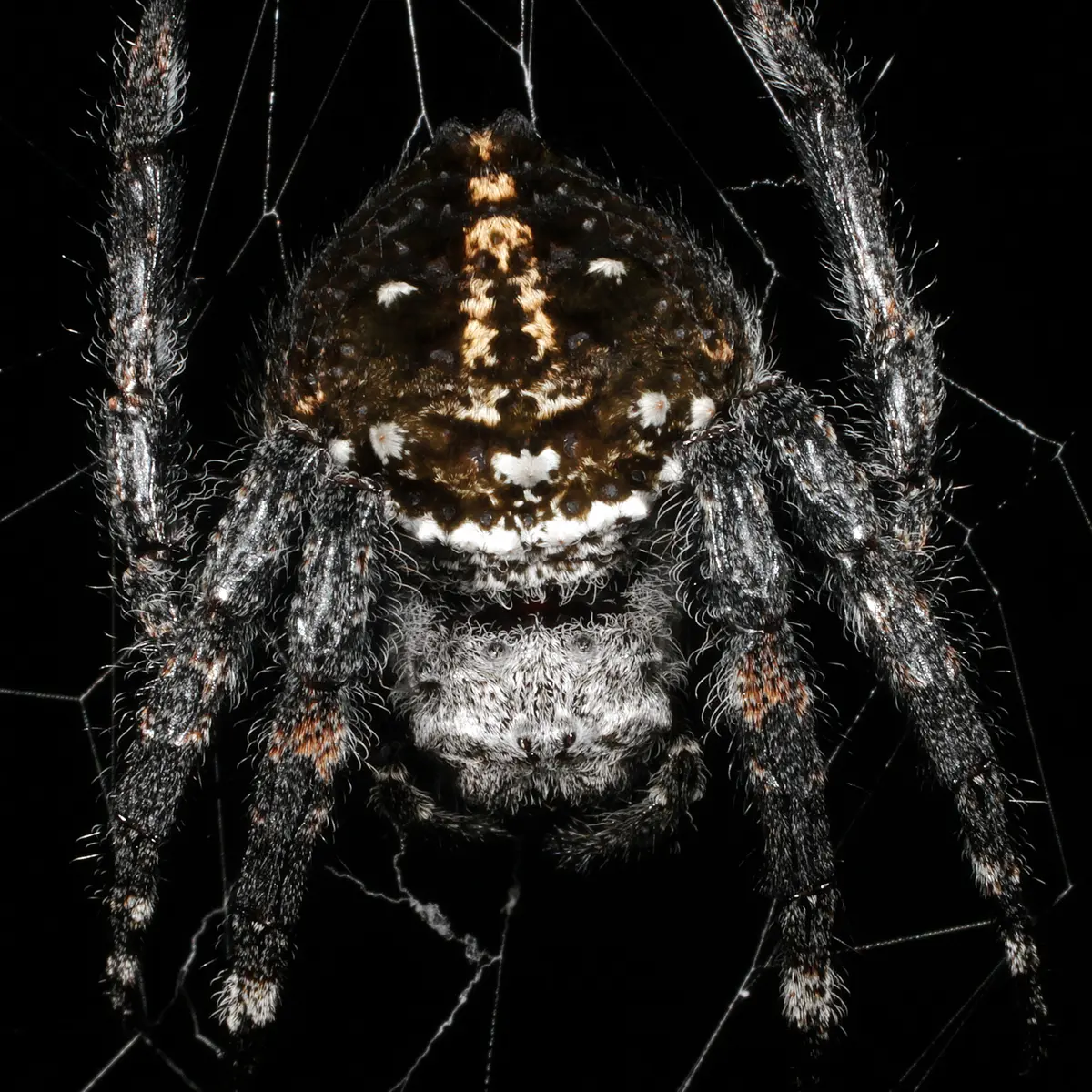
Researchers studying the Darwin’s bark spider have discovered that only large adult females spin silk with extraordinary toughness, while males and juveniles produce weaker fibres. This finding clarifies why the species’ webs are renowned for being the strongest natural fibres ever measured.
Background
The Darwin’s bark spider (Caerostris darwini) is native to the rainforests of Madagascar. Discovered by scientists in 2009, the species is famous for weaving enormous orb webs over rivers and lakes. These webs can span over 2.8 square metres with bridge lines exceeding 25 metres. The silk has a tensile strength of about 1.6 gigapascals—roughly ten times stronger than Kevlar by weight—earning it the title of the toughest biological material.
What the new study found
- Size matters: Researchers collected egg sacs and raised spiders to adulthood. They found that only fully grown females produced ultratough silk; males and subadult females spun silk that was tough but not exceptional.
- Energy trade‑off: Producing extremely strong silk is metabolically expensive. Adult females, which build large webs to capture flying insects and even small birds, invest energy in making fewer but tougher threads. Males and juveniles conserve energy by spinning more standard silk.
- Ecological adaptation: Female Darwin’s bark spiders often construct webs across rivers, using long anchor threads to suspend the web above water. The exceptional toughness prevents breakage when large prey hits the web or when high winds sway the anchor lines.
About the species
- Appearance: Females are much larger than males—a form of sexual dimorphism common among orb‑weaving spiders. They have mottled brown bodies that blend with tree bark.
- Feeding: The spiders feed on flying insects swept over rivers and sometimes catch small fish or birds that struggle in their webs. They immobilise prey with silk before injecting venom.
- Conservation: Found only in a few protected forests in Madagascar, the species may be vulnerable to habitat loss. Protecting riparian forests helps preserve their unique ecological niche.
Conclusion
The new research deepens our understanding of how Darwin’s bark spider produces its remarkable silk. It shows that extreme material properties evolve as specialised adaptations and come at an energy cost, reminding us of the delicate balance between survival needs and available resources.
Sources: TH