
Why in news?
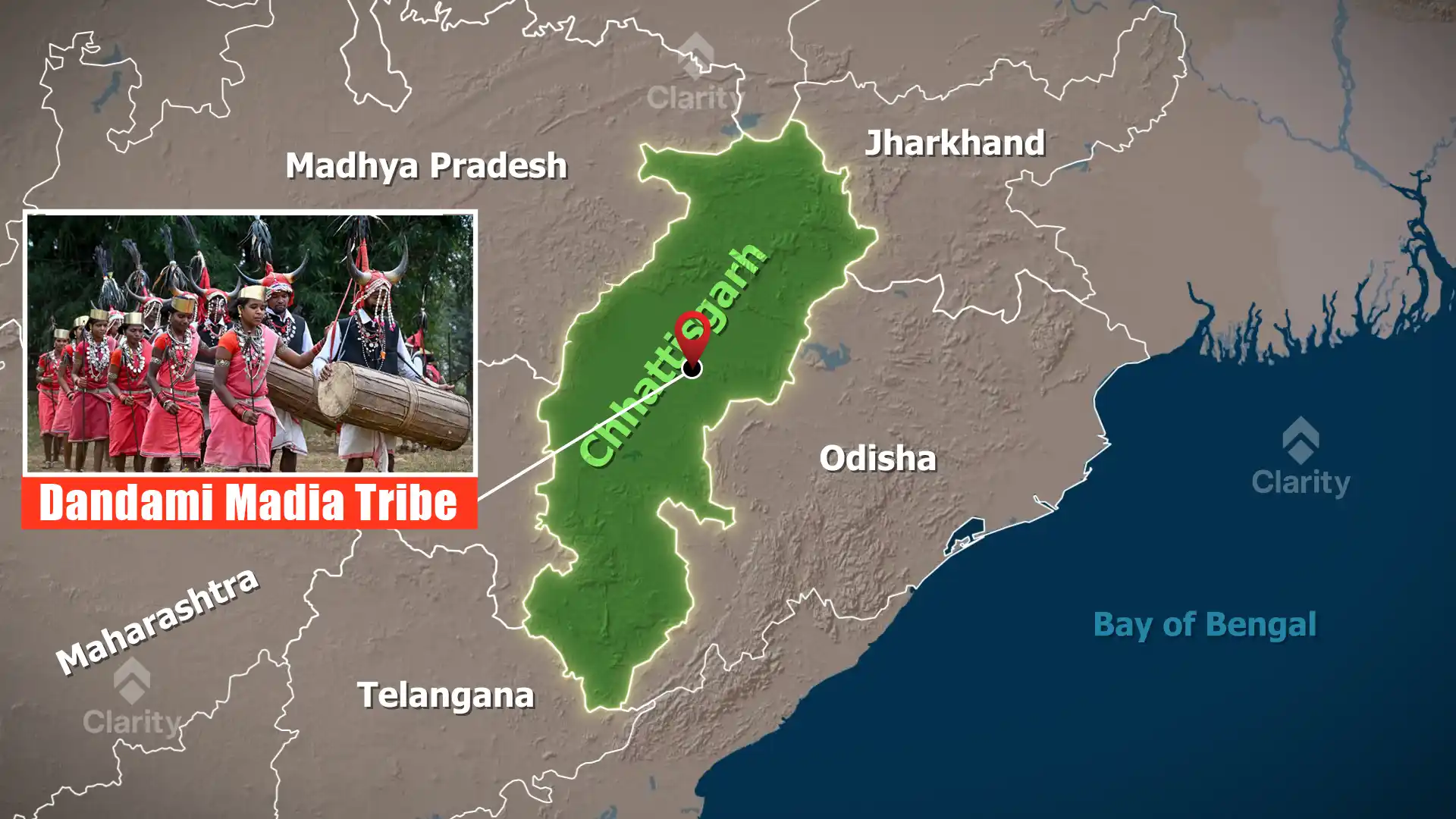
The Dandami Madia, also known as the Bison Horn Maria, were in the news because cultural demonstrations of their traditional dance were held at recent tribal festivals in Chhattisgarh. These performances highlighted the community’s unique attire and customs and sparked wider interest in their heritage.
Background
The Dandami Madia are a subgroup of the larger Gond tribe. They live mainly in the forested districts of Bastar in southern Chhattisgarh and the adjoining Gadchiroli region of Maharashtra and some parts of Madhya Pradesh. They speak a dialect of the Gondi language and practise a subsistence lifestyle based on shifting agriculture, hunting, fishing and gathering. Social institutions include the ghotul, a youth dormitory where boys and girls learn community values and courtship. The community allows divorce and remarriage and follows a mix of animist and Hindu beliefs.
Traditional attire and headgear
- Horned headgear: Men wear elaborate headgear decorated with horns made from wild bison or domesticated cattle, adorned with feathers, cowrie shells and beads. The horn-like projections give the group its popular name “Bison Horn Maria”.
- Attire: Men typically wear a loincloth and carry a tobacco pouch and comb. Women wear knee‑length white skirts and decorate themselves with beads, bangles and ear ornaments. Long hair is worn in ponytails and adorned with flowers.
- Dance: The Bison Horn dance is performed in a circle by men and women. Dancers form rows, holding drums and iron rods, and move rhythmically while stamping their feet. The dance is usually performed during marriages or festivals and represents bravery and unity.
Way of life
- Economy: Subsistence farming of millets, shifting cultivation and collection of forest produce form the economic backbone. Hunting and fishing supplement their diet.
- Social structure: Villages are typically small hamlets of thatched huts built around open spaces. The ghotul institution is central to youth socialisation and courtship.
- Beliefs: The tribe worships ancestral spirits and village deities. Rituals involve dancing, drumming and offerings of liquor and animals. Over time, Hindu practices such as worship of Shiva and local forms of the mother goddess have merged with traditional beliefs.
Importance of preserving cultural heritage
The Dandami Madia’s distinctive dance and attire are integral to their identity. Increased tourism and cultural exhibitions have brought the community into mainstream view, but also raise concerns about exploitation and loss of authenticity. Preserving their traditions requires respectful documentation, participation of community elders and ensuring that any commercial benefits reach the tribe. Programmes promoting education, healthcare and sustainable livelihoods can help the tribe maintain its way of life while adapting to modern challenges.
Source: TH